This Week’s Highlights
- Navigating a turbulent first quarter.
- Tracking the impact of geopolitical shifts on our economy.
- Exploring how private equity can uncover opportunities beyond traditional, highly concentrated markets.
A Quarter of Two Halves
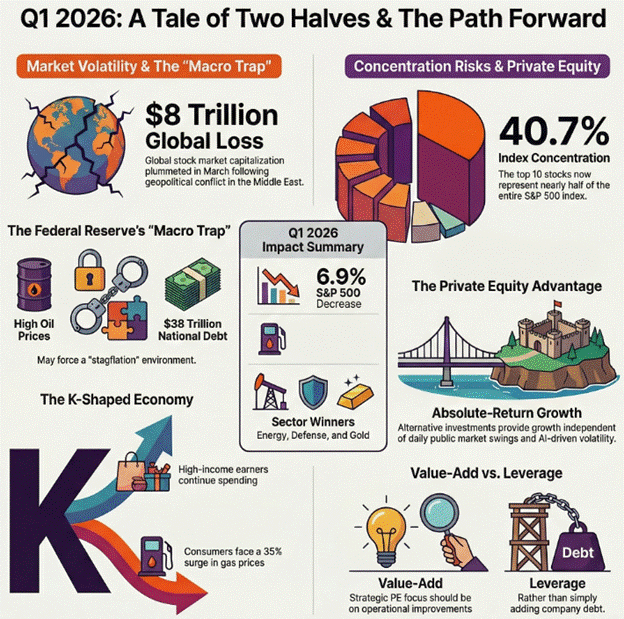
The first quarter of 2026 has been nothing short of a rollercoaster. We started the year with leftover enthusiasm from a strong 2025, pushing markets to new highs in January. However, the global economy quickly shifted into what analysts call “wartime dynamics” due to the escalating conflict in the Middle East. This geopolitical shock led to severe market contraction, with the S&P 500 suffering a 6.9% drop for the quarter. March alone saw a staggering $8 trillion lost in world stock market capitalization.
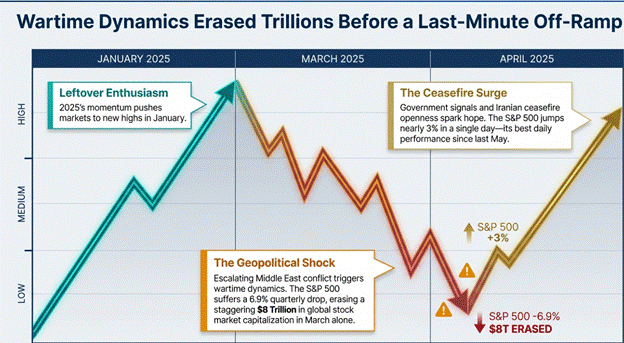
Fortunately, the quarter ended with a much-needed sigh of relief. Signals from the U.S. government and reports that Iran is open to a ceasefire provided a major off ramp for the conflict. This spark of hope fueled an extraordinary late-March rally, giving the S&P 500 a nearly 3% jump in a single day, its best daily performance since last May.
The Macro Trap and a K-Shaped Economy
Looking ahead, keep a close eye on the U.S. economic engine. America’s $38 trillion national debt is interacting with resurging inflation driven by high oil prices. This creates a macro trap for the Federal Reserve: they cannot easily cut interest rates to help service the debt if inflation is climbing, and may even be forced to keep rates high during an economic slowdown. This risks stagflation, a challenging combination of stagnant economic growth and high inflation.
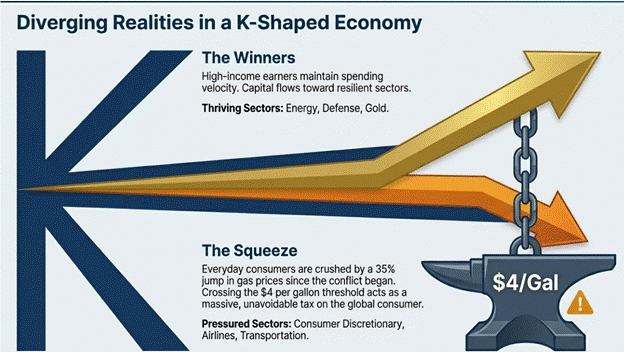
This environment has also created a “K-shaped” economy, where high-income earners continue to spend while everyday consumers feel the squeeze. U.S. gas prices have crossed the psychological $4 per gallon threshold, jumping 35% since the conflict began. This acts as a massive tax on the global consumer, heavily impacting the consumer discretionary, airline, and transportation sectors. Conversely, energy, defense, and gold have been undeniable winners during this chaotic period.
The Danger of a Top-Heavy Stock Market
Furthermore, the U.S. stock market has become historically concentrated. Today, just the top 10 stocks make up 40.7% of the S&P 500 index. While the boom in artificial intelligence has been incredibly exciting, this level of concentration means your traditional portfolio’s success is heavily tied to the fortunes of a few tech giants.
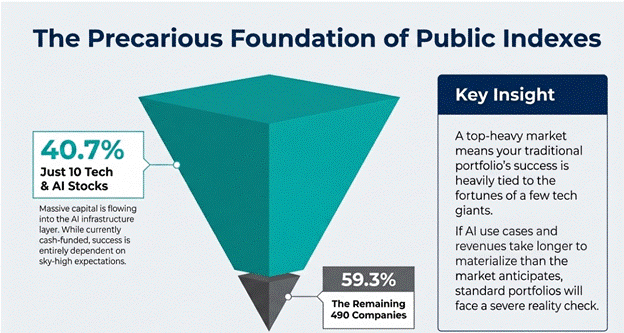
Right now, massive capital is flowing into the AI infrastructure layer, companies building the hardware and data centers. While it is encouraging that much of this spending is being funded by cash rather than debt, it is essential to manage risk thoughtfully. If AI use cases and revenues take longer to materialize than the market expects, standard portfolios could face a significant reality check.
What You’re Missing
This week, we are spotlighting: The Private Equity Advantage
If your portfolio relies solely on traditional index funds or ETFs, you might be overexposed to the extreme concentration of a top-heavy stock market and the unpredictable swings of global inflation. This is exactly where Halbert Wealth Management’s focus on alternative investments, specifically private equity, comes into play.
While public markets are caught in a tug-of-war between tech exuberance and macro fears, the private equity (PE) landscape is presenting unique opportunities.
However, not all private equity is created equal. We believe in focusing on PE managers who generate returns through value-add initiatives and proprietary deal sourcing rather than simply piling leverage, or debt, onto companies. By adopting a true business owner mindset, these strategies focus on operational improvements and long-term, absolute-return growth that operates independently of the daily noise of the stock market.
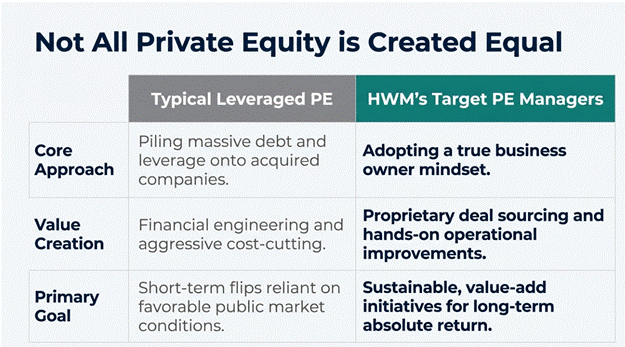
Incorporating private equity into your wealth strategy can help smooth out volatility and expand your return opportunities. Please remember that all investments involve risk, and returns are never guaranteed; private investments, in particular, require a longer time horizon and carry unique liquidity risks. Yet, in today’s top-heavy market, looking beyond the public exchanges may be a prudent step to help manage risk.
Are you curious about how alternative assets can reshape your financial future? Click here to receive Invest Like An Institution, HWM’s whitepaper on why major institutions use alternative investments and why you should consider it too.
Infographic Summary

Spencer Wright is the Executive Vice President of Halbert Wealth Management, Inc. and the author of Forecasts & Trends. He has been with HWM for over 25 years.