
After nearly two decades of stability, U.S. electricity consumption is experiencing a rapid and unprecedented surge. This significant shift is primarily fueled by the expansion of digital infrastructure, particularly data centers optimized for artificial intelligence (AI) workloads.
From Stagnation to Exponential Growth
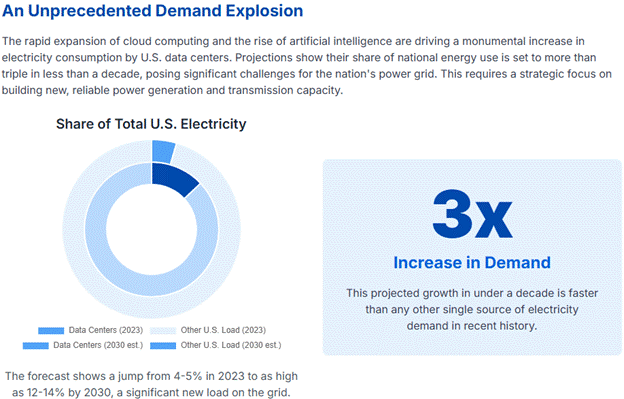
From the mid-2000s to the early 2020s, U.S. electricity demand remained relatively flat, as efficiency improvements effectively offset increases from economic and population growth. This period of equilibrium has ended. The U.S. Energy Information Administration (EIA) projects an average annual electricity consumption growth of 1.7% between 2020 and 2026. Within this, the commercial sector, which encompasses data centers, is anticipated to grow at an even faster rate of 2.6% annually.
- 2023 Data Center Consumption: Data centers are estimated to have consumed 176 TWh, accounting for 4.4% of the total U.S. electricity consumption.
- Historical Context: This represents a substantial threefold increase from the 58 TWh consumed by data centers in 2014.
The AI Accelerator
The explosion in demand for AI is the primary driver behind the current surge in global electricity consumption by data centers. The International Energy Agency (IEA) projects a more than fourfold increase in this demand by 2030.
Several factors contribute to AI’s high energy intensity:
- Energy Consumption: A single ChatGPT query uses approximately 2.9 watt-hours (Wh), significantly more than the 0.3 Wh of a conventional Google search. Training a model like GPT-4 is estimated to have consumed over 50 gigawatt-hours (GWh).
- Hardware Requirements: AI heavily relies on Graphics Processing Units (GPUs), which can draw up to 1,200 watts each, compared to 150-200 watts for traditional Central Processing Units (CPUs).
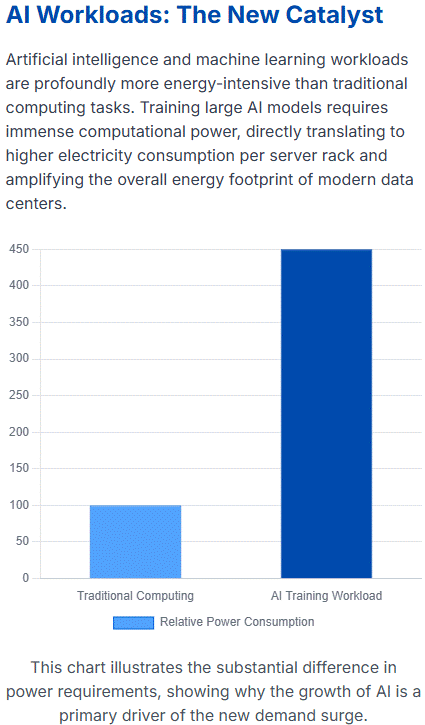
- Power Density: AI server racks require power densities ranging from 30 to 100+ kilowatts (kW), far exceeding the 7-10 kW found in traditional data centers.
- Load Profile: AI data centers pose unique challenges for grid operators due to their high power density, continuous 24/7 operation with limited flexibility, and potential for rapid fluctuations in power draw.
This growth is concentrated in hyperscale data centers, which are massive facilities consuming over 100 MW of power. The U.S. accounts for 54% of global hyperscale capacity, with Amazon, Microsoft, and Google operating 59% of that total.
Analysts agree on the likelihood of rapid growth, but disagree on the precise scale, presenting a planning challenge for utilities. Overbuilding could lead to billions in stranded assets, while underbuilding risks power shortages.
Primary Epicenters of Demand
The rapid expansion of data centers is creating an unprecedented strain on energy grids, turning several regions into “energy vortexes” due to escalating demand.
- Northern Virginia (PJM Interconnection): Often called “Data Center Alley,” this region handles an estimated 70% of global internet traffic.
- By late 2022, data centers accounted for 21% of Dominion Energy’s electricity sales in Virginia.
- Dominion has received requests for approximately 50 GW of future data center capacity.
- Forecasts indicate that unconstrained demand could double Virginia’s total electricity needs within a decade.
- Nearly 94% (30 GW) of PJM’s projected 32 GW peak load growth by 2030 is attributed to data centers.
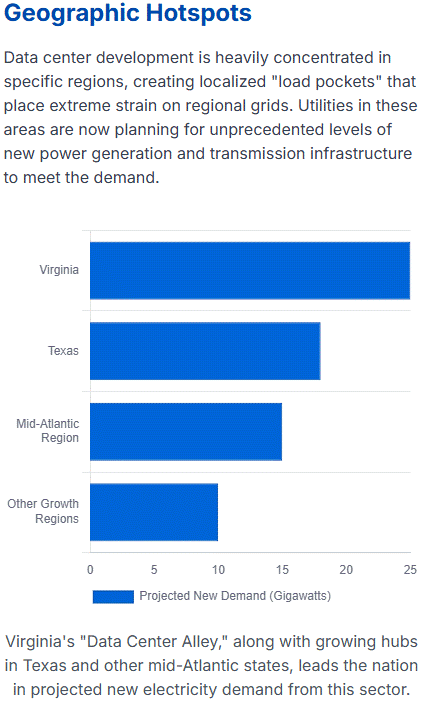
- Texas (ERCOT): A permissive regulatory environment and easy grid access have made Texas a major hub.
- As of mid-2025, data centers represented almost 69% of ERCOT’s 189 GW of large load interconnection requests.
- ERCOT officials predict the grid’s total power demand could almost double by 2030.
- The EIA projects ERCOT’s electricity demand to grow by an average of 11% in 2025 and 2026, five times the national average.
The Return of Natural Gas
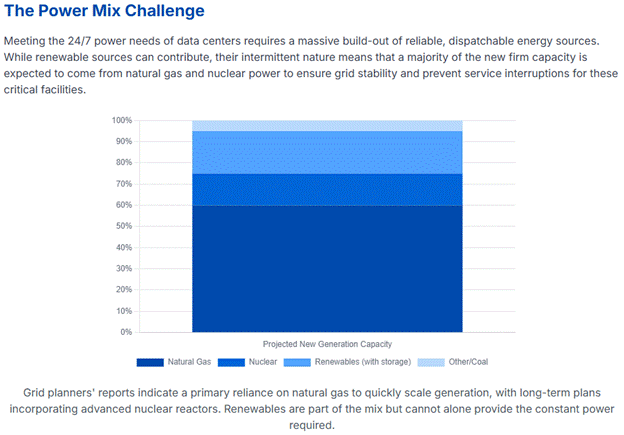
To meet the demand for constant, “firm power” that isn’t dependent on weather, utilities are planning a considerable expansion of new natural gas-fired power plants.
- PJM Projections: An analysis conducted for the Sierra Club forecasts that fulfilling anticipated data center power needs in the PJM region will necessitate the construction of 42 GW of new gas capacity by 2040.
- Utility Strategies: In Virginia, Dominion Energy is adopting a comprehensive approach that includes new natural gas facilities to ensure grid reliability.
- Texas Impact: A high-growth scenario for data centers in ERCOT would require the grid to consume 8% more natural gas in 2025 compared to baseline projections.
Renewables: Corporate Aspirations Versus Grid Realities
Leading technology companies are the largest corporate buyers of renewable energy globally, using Power Purchase Agreements (PPAs) to offset their consumption. However, this strategy faces two major hurdles:
- Interconnection Bottleneck: As of late 2023, approximately 2,600 GW of generation and storage projects (primarily solar, wind, and batteries) were awaiting interconnection queues to connect to the U.S. grid, experiencing multi-year delays.
- Intermittency: Wind and solar power cannot provide the continuous, 24/7/365 power that data centers require. Even when a company achieves “100% renewably powered” status from an accounting standpoint, the physical grid must still rely on dispatchable sources like natural gas to guarantee uninterrupted service when renewables are unavailable.
Exploring Alternative Firm Power Solutions
The magnitude of this challenge is driving investment in alternative technologies for firm power:
- Nuclear Energy: The Department of Energy has highlighted next-generation nuclear technology, particularly Small Modular Reactors (SMRs), as critically important for satisfying future data center energy demands. Technology companies have already started investing in SMR startups.
- Onsite Generation: To bypass grid limitations, operators are investigating behind-the-meter generation. A $5 billion partnership between Bloom Energy and Brookfield aims to establish dedicated, off-grid AI factories powered by fuel cells.
- Backup Diesel Generators: Nearly all data centers maintain onsite diesel generators for emergency situations. In Virginia alone, over 9,000 such generators are permitted. There is an increasing risk that these highly polluting generators will be used more frequently during grid emergencies, effectively creating a massive, unregulated shadow power plant.
Ratepayer Impact
Data centers are imposing significant new costs on ratepayers through increased generation and transmission expenses. These costs are then distributed across the bills of all residential and commercial customers.
- Washington, D.C.: Residential bills have risen by an average of $21 per month, with approximately $10 directly linked to spikes in capacity market costs.
- Ohio & Western Maryland: Capacity costs are projected to add $16 to $18 per month to residential bills.
- Virginia Projection: By 2040, the typical Dominion Energy residential customer could experience a monthly cost increase of $14 to $37, solely attributable to data centers.
Regulatory and Market Responses to Manage Load
Grid operators and policymakers are actively exploring and implementing new regulations and market mechanisms to manage the growing energy load and protect consumers from these rising costs.
- Shifting Costs to Large Loads: Proposals are emerging that would require new large energy consumers, such as data centers, to secure their own dedicated new generation sources, thereby internalizing their energy costs.
- New Service Classes for Data Centers: PJM is considering a Non-Capacity Backed Load option. Under this, data centers could opt out of capacity costs in exchange for agreeing to curtail their operations during grid emergencies.
- Mandatory Curtailment in Emergencies: A 2025 Texas law (Senate Bill 6) grants ERCOT the authority to mandate large customers to reduce their operations during grid emergencies before implementing rolling blackouts for residential users.
The Bottom Line
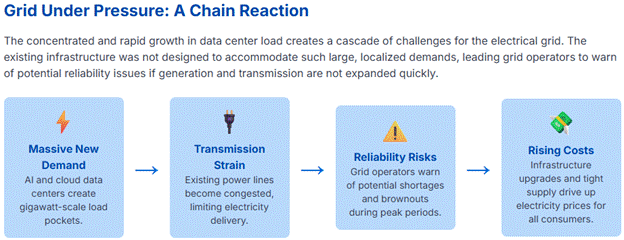
This infographic says it all.
AI Energy Source


Spencer Wright is the Executive Vice President of Halbert Wealth Management, Inc. and the author of Forecasts & Trends. He has been with HWM for over 25 years.