The 2025 Deregulation Agenda
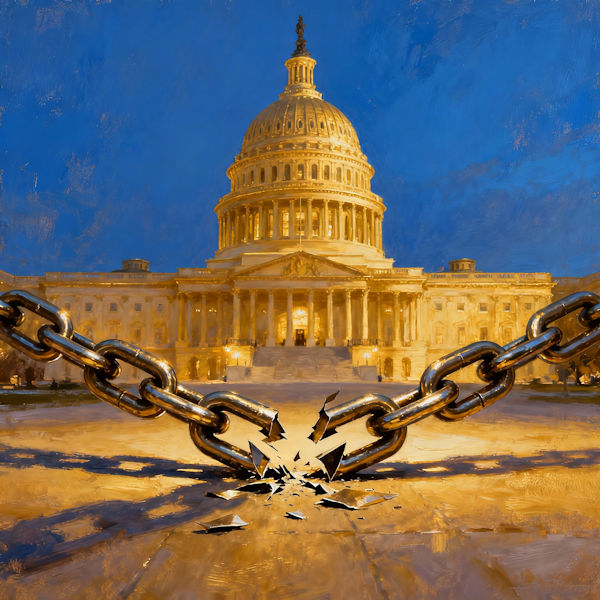
The Trump administration’s 2025 agenda marks a fundamental overhaul of the federal administrative process through a systematic deregulation initiative. This policy rests on three main principles: an ambitious mandate to eliminate regulations, the creation of a new centralized administrative body for implementation, and the deployment of innovative legal strategies to accelerate the repeal process. At its core, Executive Order 14192 dictates a 10-to-1 rule, requiring the repeal of ten regulations for every new one introduced, alongside a regulatory budget aimed at achieving a net reduction in compliance costs.

Executive Order 14192: “Unleashing Prosperity Through Deregulation”
The Trump administration has significantly tightened regulatory policy with a 10-to-1 mandate, requiring agencies to eliminate ten existing regulations for every new one introduced. This broad directive includes various documents such as guidance and policy statements, thereby expanding the scope of potential repeals.
In addition, a strict Regulatory Budget for Fiscal Year 2025 has been imposed, demanding that the net incremental cost of all new regulations, after accounting for savings from repeals, must be significantly less than zero. This measure aims to encourage agencies to prioritize the repeal of high-cost regulations.
Furthermore, the administration has rescinded the Biden administration’s November 2023 update to OMB Circular A-4, reinstating the 2003 version. This change will affect how agencies conduct regulatory impact analyses.
Legal and Procedural Levers for Expedited Repeal
The administration has introduced several strategies to accelerate deregulation, often by bypassing standard administrative procedures:
- Leveraging Supreme Court Precedent: A memorandum from April 9, 2025, instructs agencies to prioritize the repeal of regulations that are inconsistent with recent Supreme Court rulings. This provides a legal basis for agencies to argue that certain regulations are unlawful and should be repealed as a corrective measure.
- Utilizing the APA Good Cause Exception: The same memorandum directs agencies to extensively use the Administrative Procedure Act’s (APA) good cause exception. This allows them to bypass the typical public notice-and-comment rulemaking process when repealing regulations deemed facially unlawful.
- Implementing Sunset Provisions: An order issued on April 9, 2025, mandates that agencies like the Environmental Protection Agency and Department of Energy incorporate conditional sunset dates into both existing and new regulations. These rules will automatically expire after a set period—one year for some existing rules and up to five years for new ones—unless the agency actively extends them. This shifts the default from permanent regulations to those requiring periodic re-justification.
Deregulatory Actions
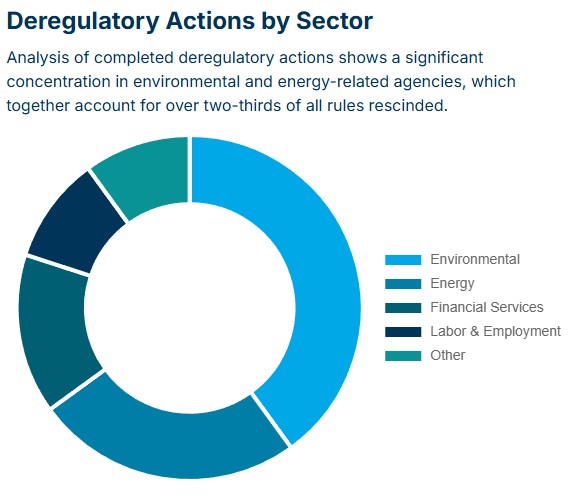
The administration has swiftly translated its framework into tangible actions across key economic sectors.
Environmental and Energy Policy Overhaul
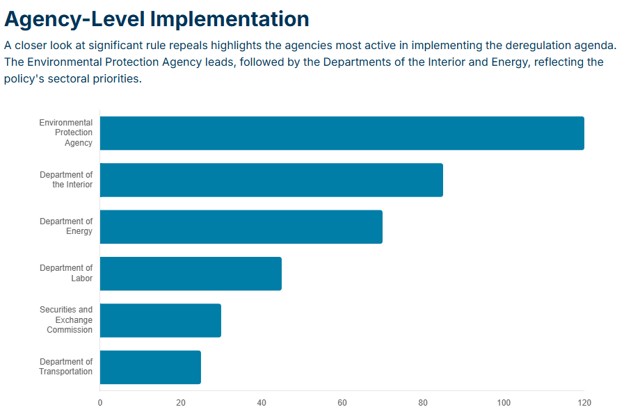
The Environmental Protection Agency (EPA) has been a primary driver of deregulation, announcing 31 historic actions on March 12, 2025. This strategy focuses on dismantling keystone regulations that form the legal basis for entire environmental regimes.
- Air Quality and Climate Change: A significant move is the reconsideration of the 2009 Endangerment Finding, which underpins almost all greenhouse gas (GHG) regulation via the Clean Air Act. Other actions include proposals to repeal all GHG standards for power plants, reconsider GHG rules for vehicles, and rescind 2024 amendments to the Mercury and Air Toxics Standards (MATS) rule.
- Fossil Fuel Production: Executive orders aim to unleash American energy by removing regulations that impede oil, natural gas, and coal development. The EPA is reevaluating methane standards and wastewater regulations for the oil and gas industry. Additionally, a July 7, 2025, executive order seeks to rapidly eliminate green energy subsidies.
- NEPA and Permitting: The Council on Environmental Quality (CEQ) has removed its government-wide regulations for implementing the National Environmental Policy Act (NEPA) through an interim final rule. This decentralizes the NEPA process, with individual agencies, such as the Department of Energy, now issuing their own revised procedures to prioritize efficiency and certainty for infrastructure projects.
Restructuring Financial Services Regulation
The financial sector’s deregulation agenda for 2025 emphasizes reversing recent rules, withdrawing guidance, and signaling a more permissive stance on bank consolidation.
- Community Reinvestment Act (CRA): On July 16, 2025, the Office of the Comptroller of the Currency (OCC), Federal Reserve, and FDIC jointly proposed to rescind the October 2023 CRA Final Rule, aiming to replace the modernized framework with 1995 regulations.
- Consumer Financial Protection Bureau (CFPB): Under new leadership, the CFPB has withdrawn pandemic-era mortgage borrower protections under Regulation X, citing unnecessary complications. Additionally, on May 12, 2025, the Bureau announced the withdrawal of numerous interpretive rules and policy statements.
- Banking and Competition: An executive order on August 13, 2025, revoked the Biden administration’s executive order promoting competition. This was followed by the FDIC’s rescission of its bank merger policy and the OCC’s restoration of a streamlined application process, collectively dismantling the framework for more stringent scrutiny of bank consolidation.
Revising Labor and Employment Standards
Recent deregulation efforts have focused on worker protections, equal opportunity, and collective bargaining.
- Workforce Investment Act (WIA): The Department of Labor (DOL) rescinded regulations on August 28, 2025, that enforced nondiscrimination provisions of the WIA. The DOL stated that these rules were obsolete as the Workforce Innovation and Opportunity Act (WIOA) superseded the WIA in 2014.
- Fair Labor Standards Act (FLSA): The DOL has proposed reverting to a 1975 interpretation of companionship services. This change would again permit third-party employers of home care workers to claim exemptions from federal minimum wage and overtime requirements.
- Competition and Non-Competes: The revocation of the 2021 executive order on competition indicates a departure from federal initiatives aimed at restricting the use of non-compete clauses.
- Federal Labor Relations: An executive order issued on August 28, 2025, broadened the list of federal agencies and subdivisions excluded from collective bargaining rights, citing national security concerns.
The Bottom Line
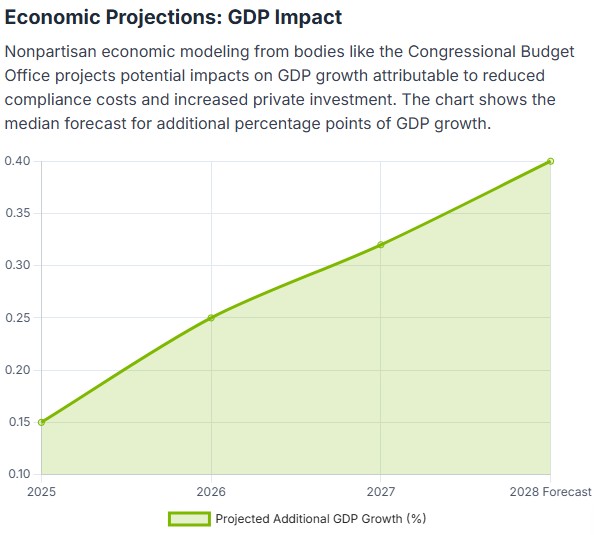
Economic Benefits of the Deregulation Agenda
- Significant Cost Savings: Estimated up to $907 billion, or over $10,600 per family of four.
- Increased GDP Growth: Projected to boost annual economic growth by 0.29% to 0.78% over the next two decades.
- Lower Federal Deficit: Expected to reduce the federal deficit by $1.1 trillion to $2.9 trillion over ten years due to economic growth.
- Reduced Inflation: A moratorium on regulatory growth is estimated to lower the annual inflation rate by 0.6% and decrease Treasury rates, further contributing to federal deficit reduction.
AI Deregulation

Spencer Wright is the Executive Vice President of Halbert Wealth Management, Inc. and the author of Forecasts & Trends. He has been with HWM for over 25 years.