
This week’s highlights…
- Why traditional retirement portfolios might need a modern update, and how alternative investments can help balance risk-conscious growth with reliable income.
- Relying purely on a conventional 60/40 portfolio of stocks and bonds leaves your purchasing power highly vulnerable to inflation.
- How alternatives can step in where traditional portfolios leave off, offering ways to tackle inflation and market volatility head-on.
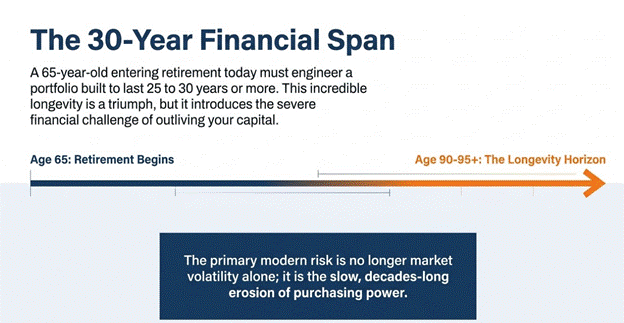
The Modern Retirement Dilemma
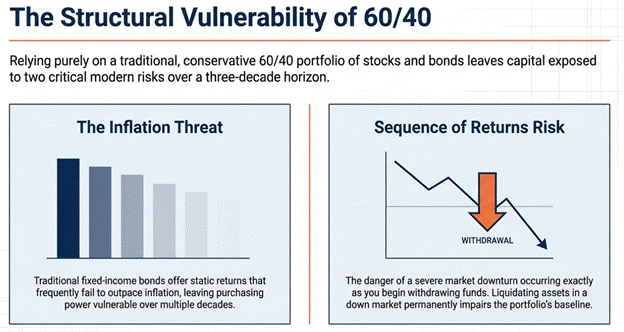
Today, a 65-year-old entering retirement might need their portfolio to last for 25 to 30 years or more. This incredible longevity is wonderful news, but it introduces a major financial challenge: the risk of outliving your money. Relying purely on a traditional, conservative 60/40 portfolio of stocks and bonds leaves your purchasing power vulnerable to inflation over those decades. Furthermore, retirees face “sequence of returns risk.”
This is the danger that a severe market downturn occurs right as you begin withdrawing funds for living expenses. Liquidating assets in a down market permanently impairs your portfolio’s ability to recover. To mitigate these modern risks, many professionals are turning to alternative assets to create a more resilient, risk-conscious growth engine.
Private Equity for Non-Correlated Growth
Private equity (PE) involves taking ownership stakes in companies that are not traded on the public stock exchanges. Because today’s public markets have become highly concentrated in just a few mega-cap tech stocks, PE offers a vital source of diversification by allowing you to invest in the broader economy.
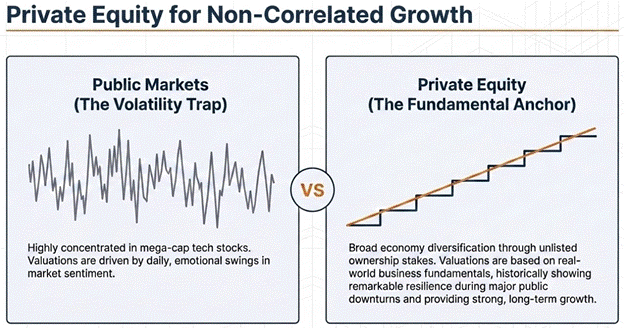
Historically, private equity has provided a path for strong, long-term returns compared to traditional public markets. What makes this asset class uniquely valuable is how it is priced. Because private equity valuations are based on actual company fundamentals rather than the daily, emotional swings of the stock market, these assets have historically shown remarkable non-correlation during major market downturns.
By focusing on real-world business value rather than market sentiment, private equity can add a powerful layer of stability and growth potential to your portfolio.
Private Equity and Private Credit often have limited liquidity. Always ask for a liquidity schedule before investing.
Private Credit for High-Yield Income
Private credit, or direct lending, involves providing loans directly to mid-sized companies without using a traditional bank as an intermediary. Following the 2008 financial crisis, new regulations caused banks to pull back from lending to the middle market, creating an opening for private lenders.
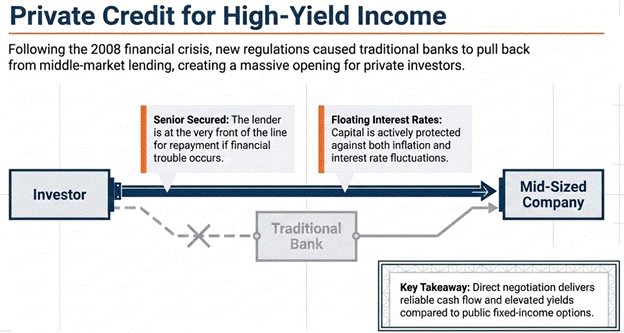
For investors, private credit can be an attractive alternative to traditional bonds. Because these loans are directly negotiated, they often deliver elevated yields compared to public fixed-income options. To help manage risk, these loans are typically “senior secured,” meaning the lender is at the front of the line to be repaid if the company faces financial trouble.
Furthermore, these loans usually feature floating interest rates, which helps protect your capital from inflation and interest rate fluctuations. Even so, Private Credit carries with it, default, credit, liquidity, and economic risks.
Adding Guardrails with Options Strategies
If you are looking for market participation but want to smooth out the ride, options-based strategies can act as financial shock absorbers. For example, covered call strategies involve holding a basket of stocks and selling call options against them. This generates a steady stream of premium income that can cushion your portfolio during flat or declining markets, though you do trade away some of the upside during sharp bull markets.
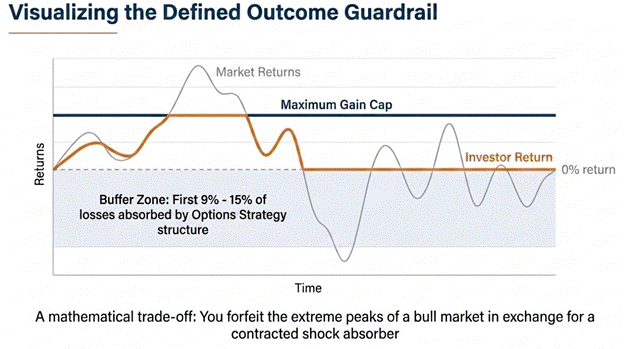
Similarly, buffered strategies use options to establish a defined outcome. They are designed to absorb a specific percentage of market losses, such as the first 9% or 15%, over a set period, while capping your maximum gains. These tools allow you to stay invested in equities with built-in guardrails.
What You’re Missing
At Halbert Wealth Management (HWM), we believe that preparing for a modern retirement requires more than just conventional stocks and bonds. What you are missing is access to the bespoke, institutional-style strategies that can help smooth volatility and expand your return opportunities.
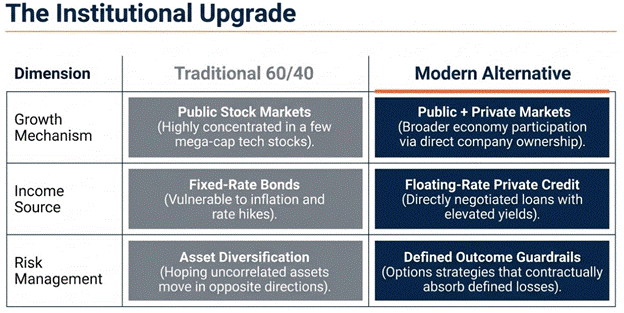
We specialize in offering non-traditional solutions tailored for investors. Whether it is allocating to Private Equity for long-term compounding, utilizing Private Credit for senior-secured, floating-rate income, or implementing buffered options strategies and to actively define and manage downside risk, we have the specialized tools to help build a more resilient portfolio.
Are you ready to see how alternative assets can fit into your wealth plan? Contact us at 800-348-3601 or info@halbertwealth.com to see if our alternative strategies are right for you.
Alternative investments may provide diversification benefits in certain market environments, but they also introduce unique risks and may not be appropriate for all investors.
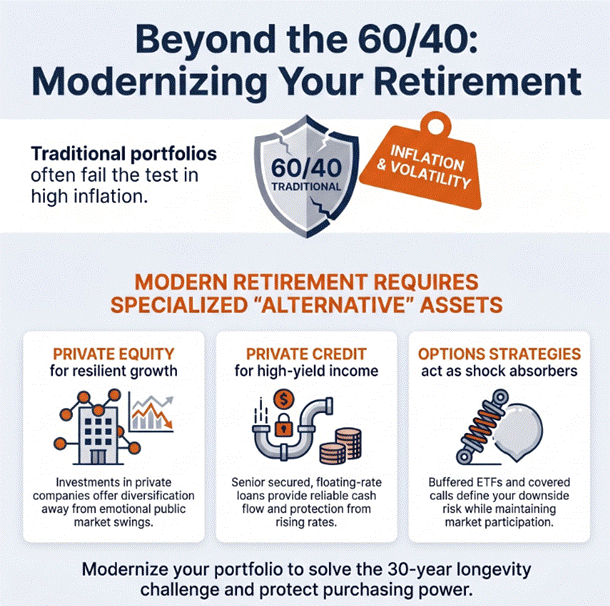
Infographic Summary

Spencer Wright is the Executive Vice President of Halbert Wealth Management, Inc. and the author of Forecasts & Trends. He has been with HWM for over 25 years.