
This Week:
- Gold and silver recover slightly after a historic “liquidity flush” erased billions in value.
- The nomination of Kevin Warsh as Fed Chair shakes up interest rate expectations.
- Copper remains the “AI trade” darling despite market turbulence.
- Central banks continue buying, putting a floor under prices.
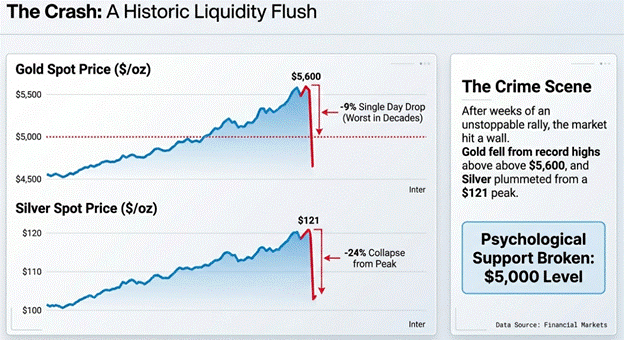
If you’ve been watching the charts this past week, you probably did a double-take. After weeks of what looked like an unstoppable rally, the metals market hit a wall. We saw gold plunge below the psychological $5,000 mark and silver take a nosedive that some traders are calling a “historic crush”.
Let’s unpack what actually happened. The fundamentals driving these markets, from AI infrastructure demand to central bank buying, haven’t vanished overnight. Here is what you need to know about the current landscape and where the experts think we are heading in 2026.
The Liquidity Flush: A Perfect Storm
On January 30 and into early February, we witnessed a massive, synchronized sell-off. Gold dropped over 9% in a single day, its worst daily performance in decades, while silver plummeted a staggering 24%.
Why the sudden U-turn? It wasn’t just one thing; it was a collision of technical and macro factors.
First, the political landscape shifted. President Trump nominated Kevin Warsh as the next Federal Reserve Chair. Markets view Warsh as a “hawk”, someone likely to prioritize fighting inflation over stimulating the economy. This boosted the U.S. Dollar, which usually puts pressure on dollar-priced commodities like gold and silver.
Second, the economic data came in hotter than expected. The U.S. added 130,000 jobs in January, beating forecasts, and unemployment dipped to 4.3%. This reduced the urgency for the Fed to cut interest rates, further strengthening the dollar.
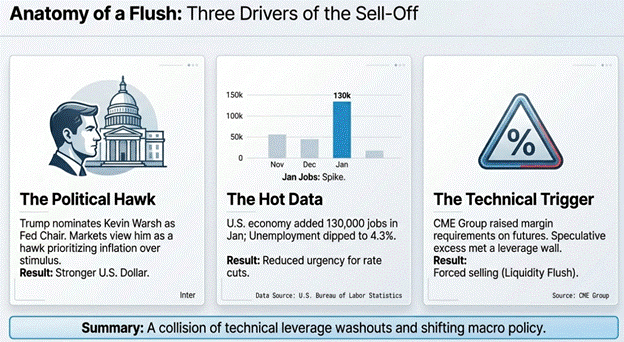
Finally, the market was simply overextended. When gold hit record highs above $5,600 and silver touched $121, speculative money piled in. The CME Group (the exchange where futures are traded) raised margin requirements, forcing highly leveraged traders to sell immediately to cover their positions, a classic liquidity flush.
Silver: Volatility is the Name of the Game
Silver has been the wildest ride of 2026 so far. After surging over 140% in 2025 and hitting that dizzying $121 peak in January, it crashed back down to the $75–$80 range.
Despite the price drop, the structural case for silver remains compelling. We are looking at a market expected to be in deficit for the sixth consecutive year in 2026. The demand isn’t just coming from investors; it’s industrial. The boom in solar panel manufacturing and the expansion of AI data centers are devouring physical silver.
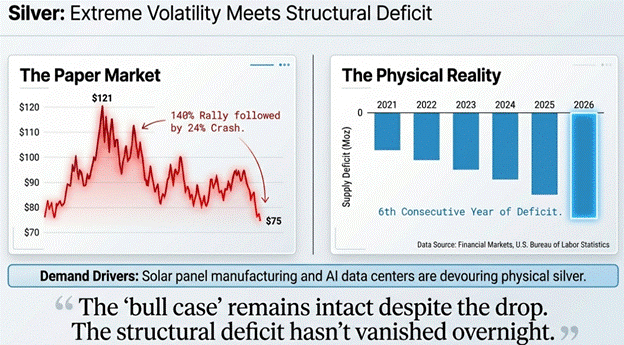
The Outlook: While the recent drop was painful for latecomers, analysts suggest the bull case is intact. J.P. Morgan forecasts silver prices to average around $81 per ounce in 2026. Some, like Bank of America, have even more aggressive bull-case scenarios pointing toward triple digits if supply shortages persist, though they warn of volatility. The key support level to watch right now is between $74 and $75; holding this line is crucial for the next leg up.
Copper: The Strategic Asset of the AI Era
While gold and silver are often traded as monetary assets, copper is telling a different story, one of physical scarcity and technological necessity. Copper prices have surged to record highs, touching above $6.00 per pound recently.
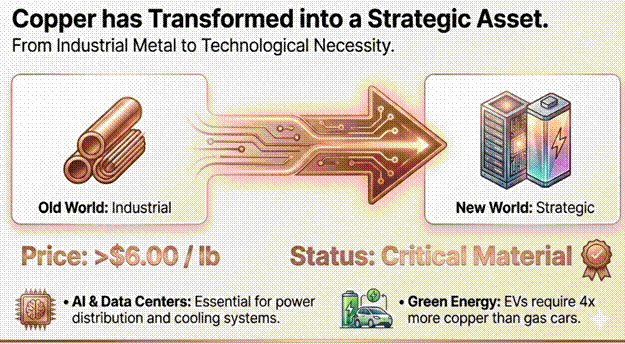
Copper has effectively transformed from a standard industrial metal into a strategic asset. Why? Because you cannot build the future without it.
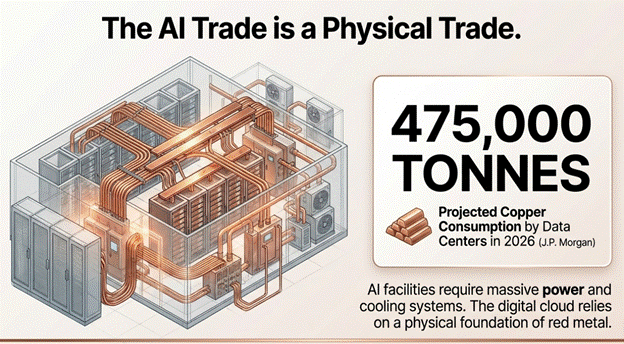
- AI & Data Centers: AI facilities require massive power and cooling systems, all of which are copper-intensive. J.P. Morgan estimates data centers will consume 475,000 tonnes of copper in 2026 alone.
- Green Energy: An electric vehicle uses up to four times more copper than a gas car, and wind/solar farms are heavy users of the red metal.
Supply Constraints: The world wants more copper, but mines are struggling to deliver. Major disruptions in Chile and Indonesia (specifically the Grasberg mine), combined with declining ore grades, have tightened global supply. J.P. Morgan projects a supply deficit of 330,000 tonnes this year.
The Forecast: Analysts are broadly bullish here. Goldman Sachs and Citigroup both see prices supported by these deficits, with forecasts ranging from $11,000 to over $13,000 per metric ton. However, keep an eye on U.S. trade policy; potential tariffs could cause short-term price distortions by encouraging stockpiling.
The Fed and the Dollar: The Macro Headwinds
The Federal Reserve held interest rates steady at 3.50%–3.75% in January, pausing the cuts we saw late last year. While the market had priced in aggressive cutting for 2026, the resilient jobs data and the Warsh nomination have tempered those expectations.
Gold hates high real interest rates (since gold pays no yield), so this higher for longer narrative is a headwind. However, central banks, particularly in emerging markets like Poland, China, and India, are still buying gold to diversify away from the U.S. dollar. This institutional buying creates a floor under the price, preventing total collapse even when the dollar rallies.
The Bottom Line
So, is the bull run over? Most analysts say no, it’s likely just a pause or consolidation.
Expect Volatility: With geopolitical tensions high and Fed policy in flux, sharp two-way moves will continue. The recent crash cleared out the froth (speculative excess), which can be healthy for a long-term trend. As we move further into 2026, patience will be a virtue. January’s parabolic move is over, but the fundamental story for these metals remains one of the most interesting in the market.
AI Metal Boom!
(AI is like a box of chocolates…)


Spencer Wright is the Executive Vice President of Halbert Wealth Management, Inc. and the author of Forecasts & Trends. He has been with HWM for over 25 years.