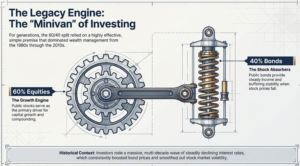
Navigating Inflation, AI, and Private Markets
This week’s highlights…
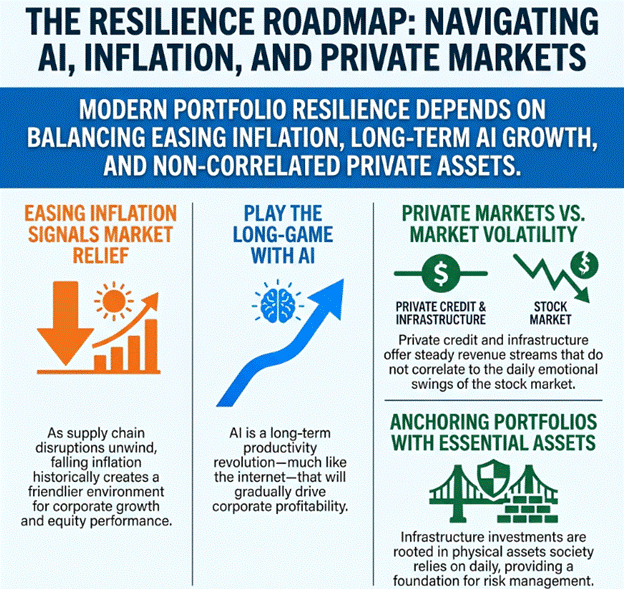
- Recent inflation was largely driven by supply chain disruptions, but as these pressures ease, the market environment is becoming more favorable for corporate growth.
- Generative AI is creating a new frontier for productivity; while current impacts are subtle, long-term integration is expected to boost corporate profitability.
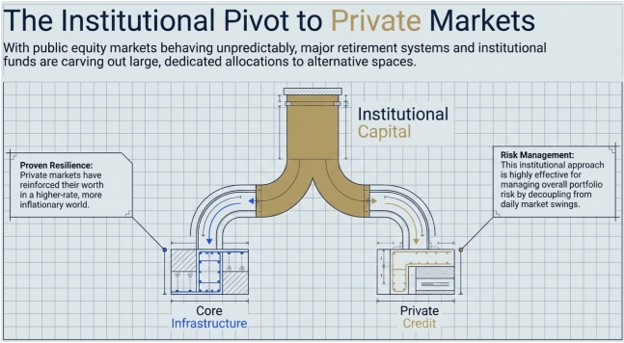
- Institutional investors are increasingly utilizing private markets and credit to build portfolio resilience against the unpredictability of public equity markets.
Inflation’s New Path: From Supply Constraints to Market Relief
Over the past couple of years, inflation has been the dominant headline in every financial publication. But what was the true culprit? Recent economic research emphasizes that a massive portion of pandemic-era inflation was driven by severe global supply chain disruptions, rather than just overwhelming consumer demand or an abundance of direct fiscal stimulus.
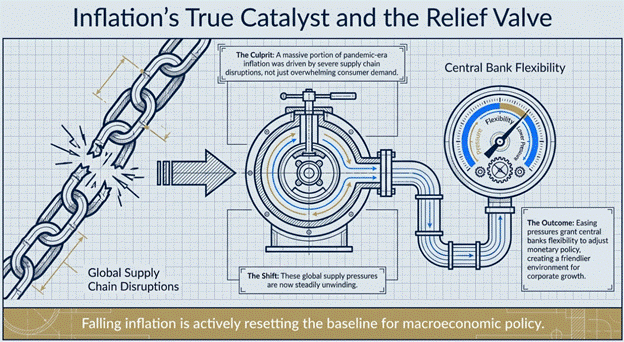
The good news for the business world is that these global supply chain pressures have been steadily unwinding. Historically speaking, when inflation is actively falling rather than rising, broad equity markets, such as the S&P 500, have shown a strong tendency to perform well. Easing inflationary pressures give central banks, like the Federal Reserve, the flexibility to adjust monetary policy, which generally provides a much friendlier environment for corporate growth.
However, while public markets might enjoy a temporary boost from falling inflation, we always remind our clients that relying solely on traditional equities leaves you exposed to sudden market shifts. A truly resilient portfolio requires looking beyond the obvious.
The Productivity Revolution: AI at Work
You can hardly open a news app today without seeing a story about Artificial Intelligence. But beyond the flashy headlines, economists are rigorously studying how generative AI will actually impact the labor market and long-term business productivity.
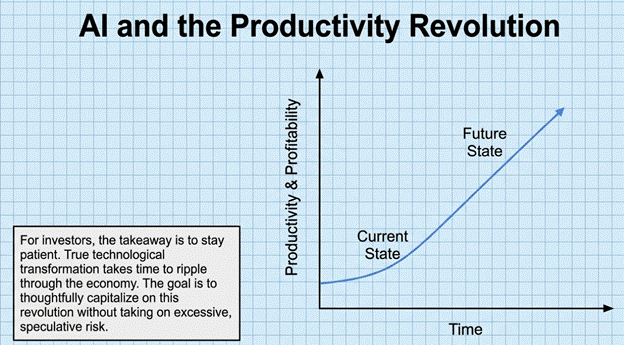
Currently, we are witnessing what some experts call an “unseen frontier” of innovation. Studies show that while a large percentage of firms have started adopting AI tools, the immediate effects on national productivity metrics remain somewhat muted.
This is completely normal; true technological transformation takes time to ripple through the economy, much like the early days of the internet. As companies gradually learn to integrate these tools, this technical efficiency could significantly impact corporate profitability and long-term asset returns. For investors, the takeaway is to stay patient and seek out managers who understand how to thoughtfully capitalize on this long-term productivity revolution without taking on excessive, speculative risk.
Private Markets: A Foundation for Portfolio Resilience
With public equity markets often behaving unpredictably, many institutional investors are turning their attention to alternative spaces. Recent industry outlooks highlight that private markets have strongly reinforced their resilience, proving their worth even in a higher-rate, more inflationary world.
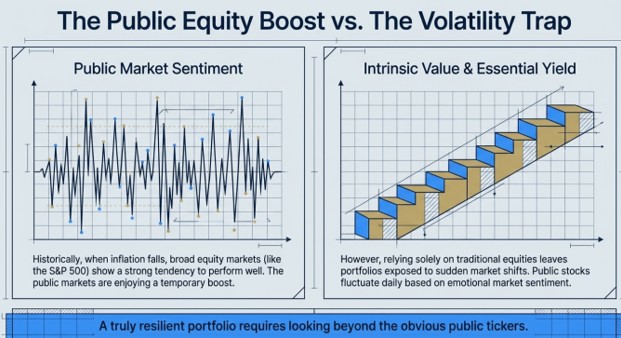
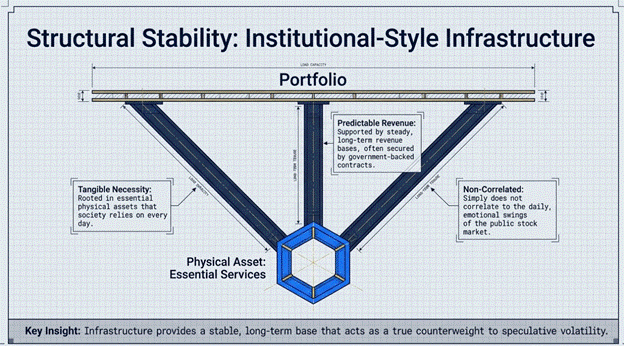
For example, major retirement systems and institutional funds are increasingly carving out large, dedicated allocations for core infrastructure and private credit. Why is this happening? Because these asset classes often provide steady, long-term revenue bases, such as essential services or government-backed contracts, that simply do not correlate to the daily, emotional swings of the public stock market. This institutional approach is highly effective for managing overall portfolio risk.
What You’re Missing
Spotlight: The Power of Private Credit and Infrastructure
If your portfolio consists entirely of publicly traded stocks and standard bonds, you might be missing out on the unique, stabilizing benefits of alternative investments. At Halbert Wealth Management, our absolute-return, risk-aware philosophy leads us to explore bespoke, non-traditional strategies designed to help smooth out volatility and expand your opportunities for returns.
One area we are currently highlighting for qualified and accredited investors is the strategic use of Private Credit and Institutional-Style Infrastructure. Unlike public stocks, which fluctuate daily based on market sentiment, infrastructure investments are rooted in essential physical assets that society relies on every day.
Meanwhile, private credit strategies can offer attractive yields that respond differently to shifting interest rates compared to traditional fixed income. These bespoke solutions can serve as powerful tools for expanding your portfolio’s horizon while maintaining a strict eye on risk management.
Are your current investments properly diversified against unexpected market shocks? We invite you to explore how these non-correlated strategies might fit into your broader financial plan.
| Ready to learn more about the power of alternative assets? Download our Alternative Assets Explainer. |
Infographic Summary

Spencer Wright is the Executive Vice President of Halbert Wealth Management, Inc. and the author of Forecasts & Trends. He has been with HWM for over 25 years.