This week’s highlights:
- Unpacking the traditional 60/40 portfolio
- Exploring why the investment landscape is shifting
- Looking at how alternative assets can help build a more resilient financial future
Is the 60/40 Portfolio Running Out of Gas?
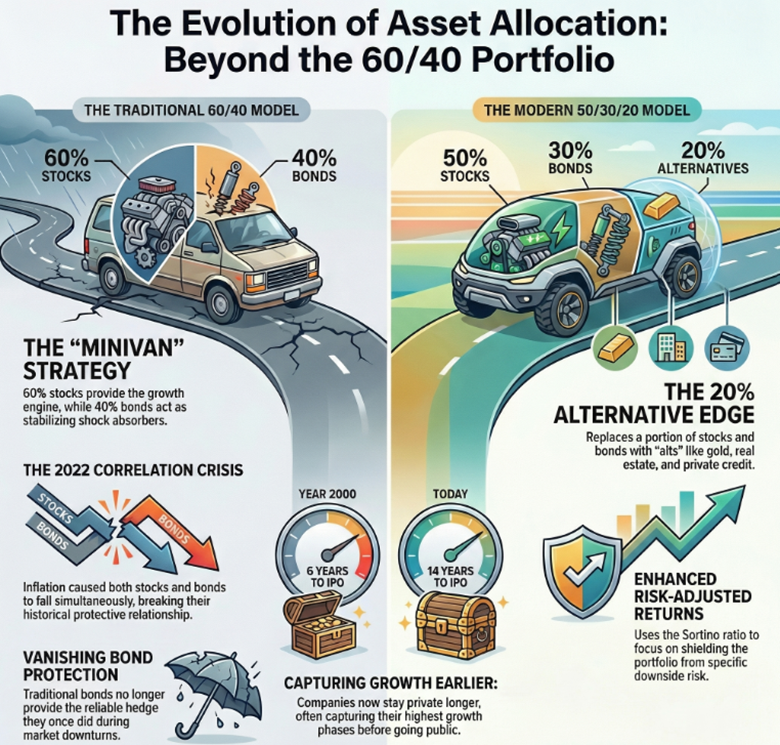
For generations, the 60/40 portfolio, allocating 60% to stocks and 40% to bonds—has been the reliable minivan of the investing world. The strategy relied on a very simple premise: stocks serve as the engine for growth, while bonds act as the shock absorbers, providing steady income and stability when stock prices fall.
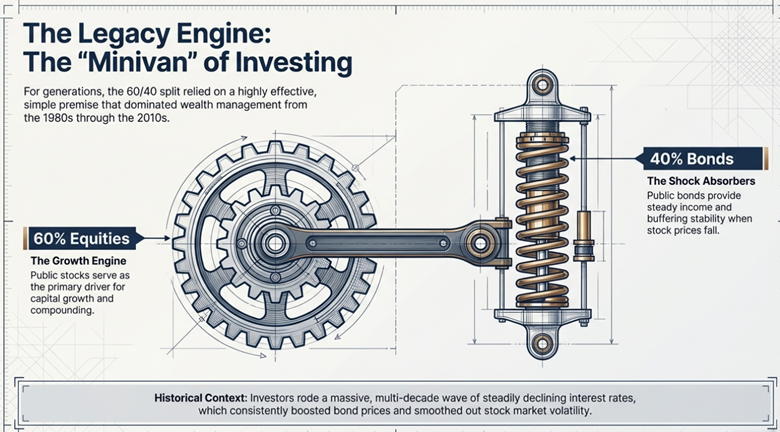
This balanced approach worked beautifully from the early 1980s through the 2010s. During those decades, investors rode a massive wave of steadily declining interest rates, which boosted bond prices and smoothed out stock market hiccups.
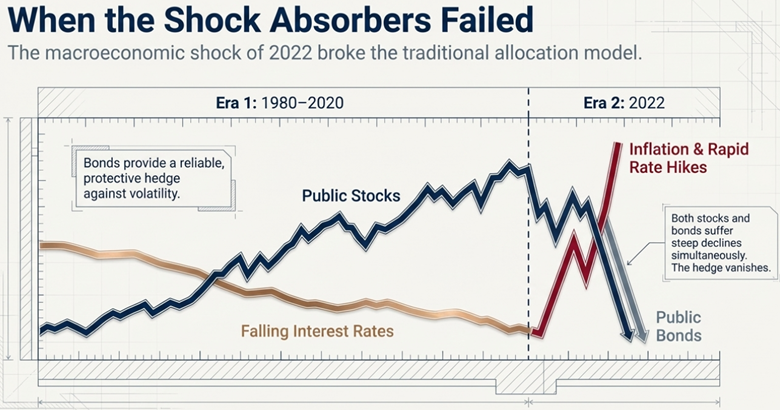
However, the financial environment of 2022 served as a harsh wake-up call. When inflation spiked and central banks rapidly raised interest rates, both stocks and bonds suffered steep declines at the exact same time. The reliable, protective hedge that bonds were supposed to provide suddenly vanished, exposing the vulnerabilities of relying solely on traditional public markets.
The Rise of the 50/30/20 Model
As a result of these structural shifts, the financial world is evolving. We are increasingly seeing a shift away from the classic 60/40 split and toward a more dynamic 50/30/20 model, 50% equities, 30% bonds, and 20% alternative investments.
Alternatives, also known as “alts,” encompass assets outside of regular public stocks and bonds. This broad category includes private equity, private credit, real estate, and hedge funds. These non-traditional investments are valuable because they often do not move in tandem with the public stock market.
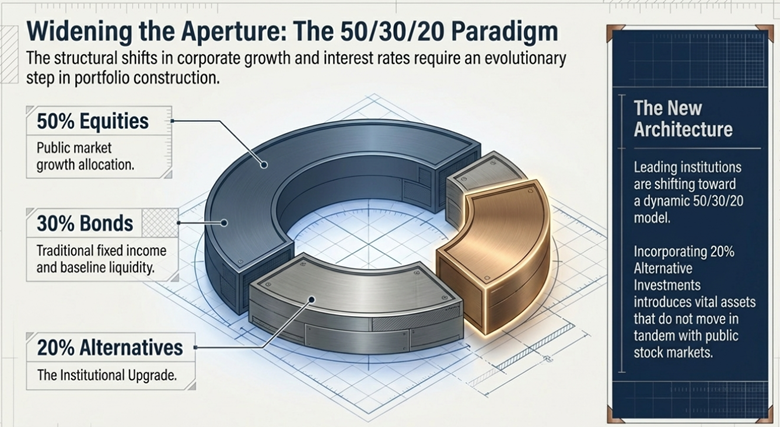
For example, physical assets like gold and alternative strategies like market neutral allocations have demonstrated a near-zero correlation to the S&P 500 over the long term, acting as a true portfolio diversifier when mainstream markets get turbulent.
Understanding Risk and the Shift to Private Markets
When blending alts into a portfolio, the primary goal is often to improve “risk-adjusted returns”. Simply put, this metric evaluates how much return you are earning for the specific level of risk you are taking on.
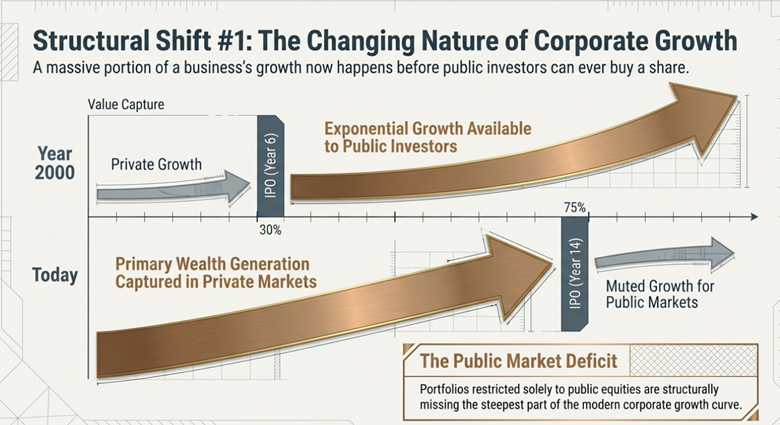
When professionals evaluate how well a portfolio manages risk, they often use tools like the Sharpe and Sortino ratios. While the Sharpe ratio measures overall volatility, the Sortino ratio focuses strictly on downside risk, the actual pain of losing capital. Historically, alternative investments have shown a strong ability to improve these ratios, meaning they can help shield portfolios from harmful downward swings while still participating in growth.
Furthermore, the structure of the corporate world has fundamentally changed. Companies are staying private much longer today than they did two decades ago. In the year 2000, a typical tech company went public after about six years; today, that timeline has stretched to 14 years.
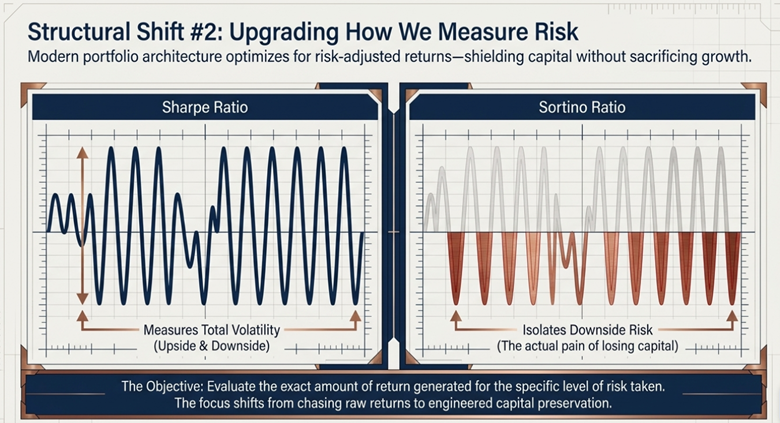
Because of this, a massive portion of a business’s growth happens before everyday public
investors can ever buy a share. At Halbert Wealth Management, we believe that understanding these macroeconomic shifts and exploring non-traditional strategies is vital. Gently widening the aperture of your investable universe can be a strategic way to seek diversification in an ever-changing world.
What You’re Missing: Alternative Income Strategies
Traditionally, the “40” in a 60/40 portfolio meant public government or corporate bonds. However, with the changing correlation between public stocks and bonds, many large institutions are replacing a portion of their traditional bonds with alternative income strategies such as market neutral income.
Market neutral income strategies are historically low volatility, not highly correlated to major market indexes, and can act as a true portfolio diversifier and alternative source of return.
At Halbert Wealth Management, we specialize in introducing clients to these institutional-style alternative income strategies to smooth out market volatility and expand return opportunities.
Ready to learn more about alternative market neutral income? Click Here
Infographic Summary