
Issue No. 01 | June 16, 2026
This week’s highlights…
- The investment strategies of massive university endowments
- The changing dynamics of the traditional 60/40 portfolio
- The growing role of alternative assets in achieving true diversification
- How institutional-level diversification can help build a more resilient portfolio
Borrowing the Endowment Playbook
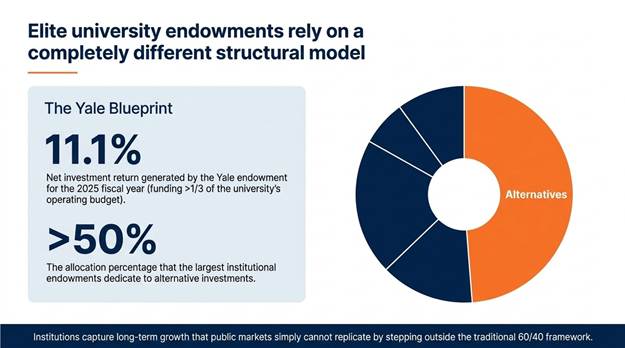
For decades, elite university endowments have paved the way in alternative investing. The Yale University endowment, widely considered a pioneer of this diversified model, generated an 11.1% net investment return for the 2025 fiscal year, helping to fund over a third of the university’s operating budget.
The Yale Endowment is presented for illustrative and educational purposes only. Yale’s investment objectives, resources, time horizon, liquidity constraints, and access to investment opportunities differ significantly from those of individual investors. Past performance of any institution is not indicative of future results
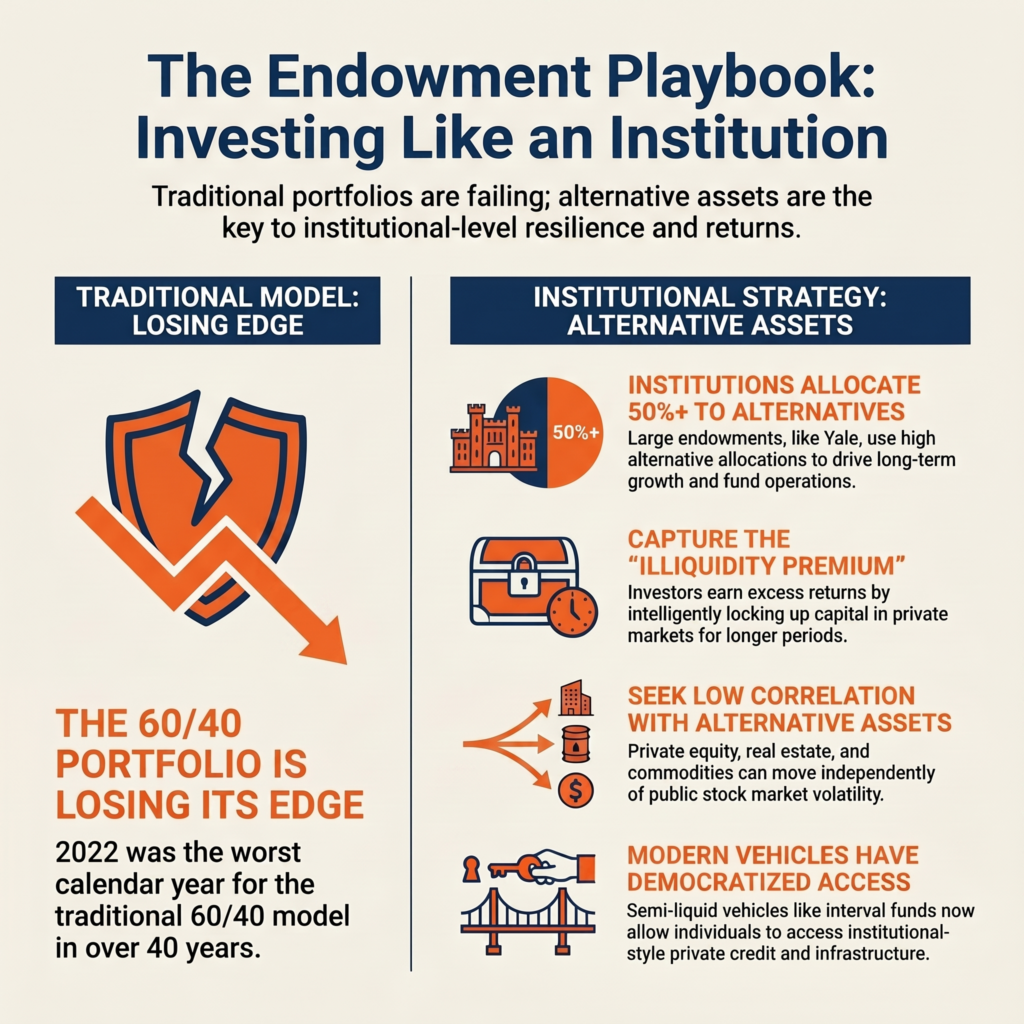
According to data on institutional investing, the endowments with the largest asset bases often allocate more than 50% of their portfolios to alternative investments. The primary draw for these large institutions is the “illiquidity premium”, an excess return historically rewarded to investors who are willing to lock up their capital for extended periods. By intelligently accepting illiquidity, these institutions have been able to capture long-term growth that public markets simply cannot replicate.
Rethinking the 60/40 Portfolio
For many years, relying on a “60/40 portfolio”, composed of 60% traditional public stocks and 40% bonds, was the standard approach to managing investment risk. This strategy relies on the assumption that bonds will stay steady or increase in value when equities decline, acting as a natural hedge against volatility.
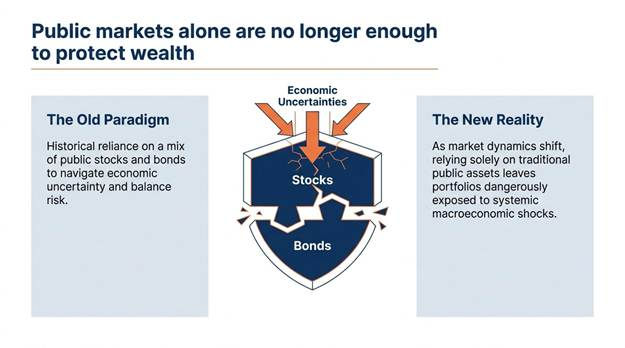
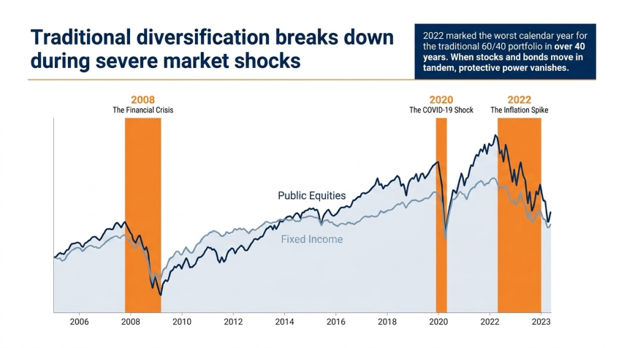
However, recent financial crises have called this paradigm into question. During significant downturns, such as the 2008 financial crisis, the COVID-19 shock of 2020, and the sudden inflation spike in 2022, the correlation between stocks and bonds increased, causing them to fall simultaneously. In fact, 2022 proved to be the worst calendar year for the 60/40 portfolio in over forty years. When public equities and fixed income move in tandem, the protective power of traditional diversification begins to break down.
Historically, some private-market investments have offered the potential for additional returns associated with reduced liquidity, although such outcomes are not guaranteed.
Seeking True Diversification with Alternatives
With the vulnerabilities of traditional portfolios exposed, many investors are realizing that public stocks and bonds may no longer be enough to protect their wealth. To build true resilience, the focus is shifting toward alternative assets, a category that now accounts for roughly 15% of global assets under management, or an estimated $22 trillion.
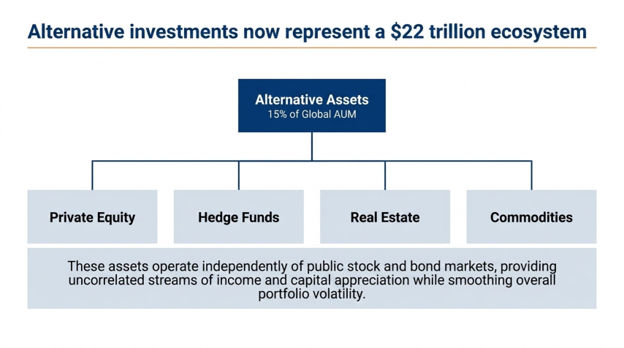
Alternatives encompass a wide variety of investments, including private equity, hedge funds, real estate, and commodities. Because these assets often operate independently of public stock and bond markets, they can provide low or even negative correlations to traditional investments. Incorporating alternative assets can potentially help smooth out overall portfolio volatility, reduce maximum drawdowns during systemic market shocks, and provide uncorrelated streams of income and capital appreciation.
What You’re Missing: Investing Like an Institution
At Halbert Wealth Management, our absolute-return, risk-aware philosophy is centered on finding non-traditional strategies that can smooth volatility and expand your opportunities. For many investors, a significant portion of the institutional investing world has historically remained out of reach due to the strict capital lock-ups of private markets.
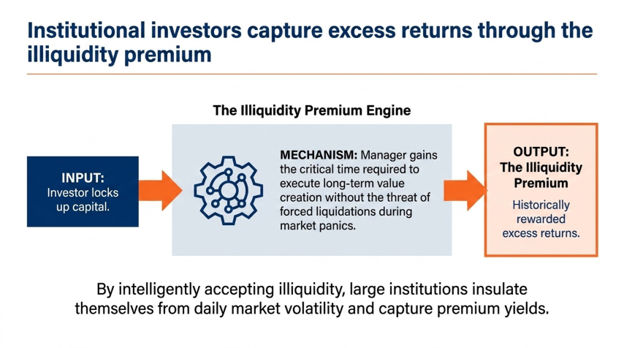
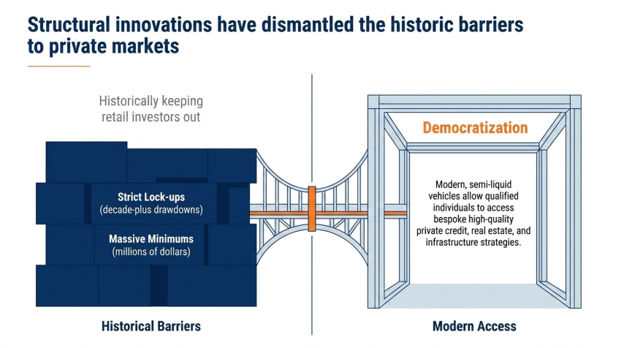
In the past, accessing the illiquidity premium meant locking up millions of dollars in a drawdown fund for a decade or more. Today, however, structural innovations and the democratization of alternatives have brought these bespoke solutions to a much wider audience. Through modern, semi-liquid vehicles like interval funds, qualified individuals can now access high-quality private credit, real estate, and infrastructure strategies while maintaining a manageable, periodic liquidity schedule.
Incorporating these alternative assets into your portfolio can be a powerful way to tap into institutional-style diversification, smoothing the ride when public markets get turbulent. To help you better understand how to apply these strategies to your own wealth, we have put together a comprehensive new deliverable: Investing Like an Institution.
This exclusive guide breaks down how endowments and large pensions build their portfolios.
| Ready to learn more? Explore how institutional-style strategies can benefit your custom portfolio design? Download your free copy of Investing Like an Institution. You can also schedule a one-on-one consultation with our team. |
Summary Infographic

Spencer Wright is the Executive Vice President of Halbert Wealth Management, Inc. and the author of Forecasts & Trends. He has been with HWM for over 25 years.