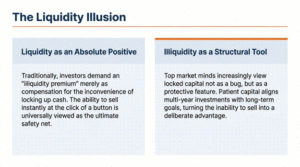
This week’s highlights…
- The “new normal” in private markets
- The infrastructure super-cycle powered by artificial intelligence
- How innovative fund structures are expanding access to alternative investments
A New Era for Private Markets
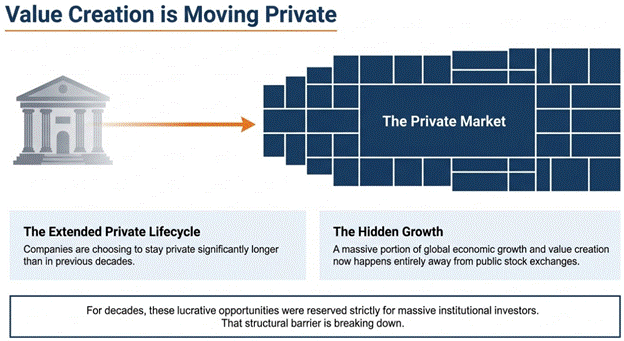
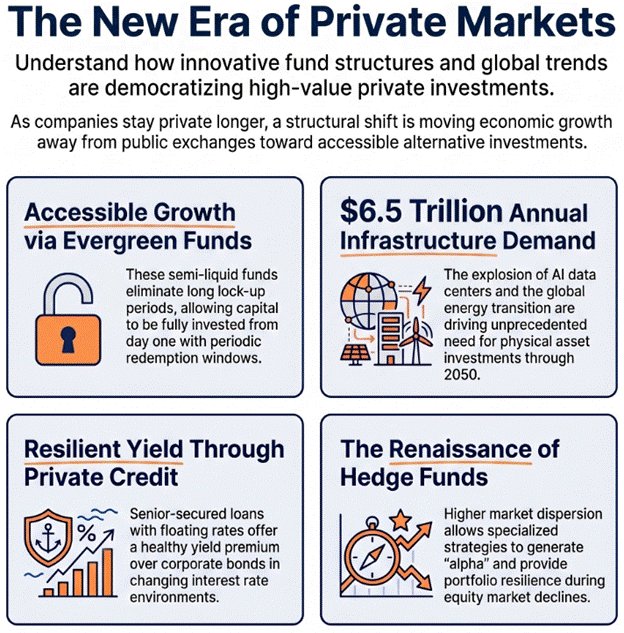
The global economy is undergoing a massive structural shift, and private markets are right at the center of it. Companies are choosing to stay private for much longer, meaning a significant portion of economic growth and value creation is now happening away from public stock exchanges. For decades, these lucrative opportunities were reserved almost exclusively for large institutional investors, but we are now seeing a rapid democratization of access across the wealth management landscape.
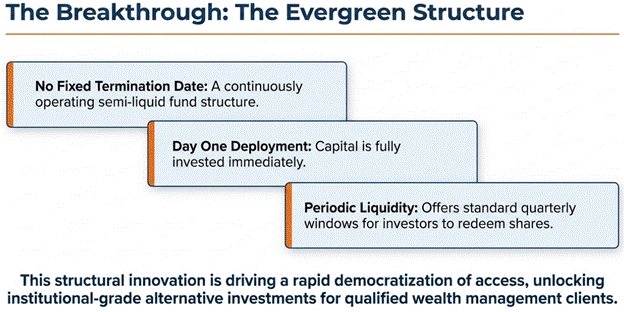
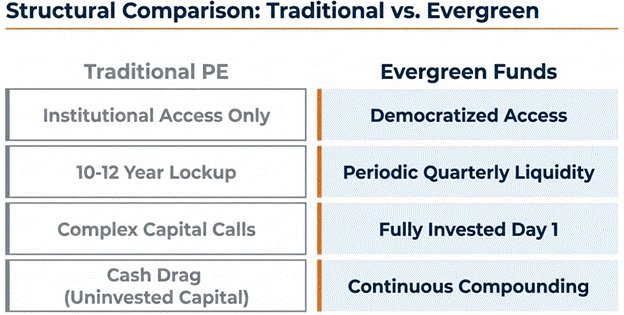
A major driver of this change is the rapid rise of “evergreen” or semi-liquid funds. Unlike traditional private equity funds that lock up capital for ten to twelve years and rely on complex capital calls, evergreen funds have no fixed termination date.
They allow your capital to be fully invested from day one, meaning it can compound continuously without the drag of uninvested cash. Furthermore, they offer investors periodic windows—typically quarterly—to redeem their shares. This structural innovation is unlocking a vast new pool of capital, giving clients a simpler way to build diversified portfolios.
The Infrastructure and AI Super-Cycle
We are also witnessing an incredible growth phase in infrastructure, driven by what experts refer to as the “three Es”: rising energy demand, energy security, and the energy transition. Artificial intelligence is playing a massive role here. The immense power requirements of AI data centers, combined with the reshoring of critical manufacturing, are creating unprecedented demand for modern infrastructure and specialized real estate.
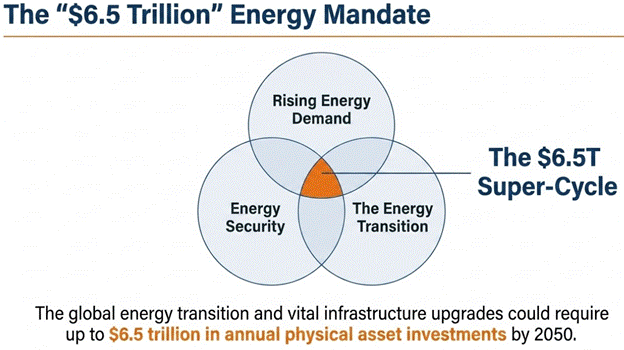
In fact, the global energy transition and related infrastructure upgrades could require up to $6.5 trillion in annual physical asset investments by 2050. For investors, infrastructure offers the potential for steady income streams and a natural hedge against inflation, as many of these assets are supported by long-term, inflation-linked contracts.
Opportunities in Private Credit and Hedge Funds
Private credit has matured from a niche strategy into a mainstream asset class, effectively filling the lending void left by traditional banks after the Global Financial Crisis. Today, private credit offers a healthy yield premium compared to public market corporate bonds. Because these loans are often senior-secured and feature floating interest rates, they can be a highly attractive and resilient way to navigate changing economic conditions and interest rate environments.
Meanwhile, hedge funds are experiencing a true renaissance. For years, low interest rates and artificially low volatility made it difficult for hedge fund managers to generate “alpha”—returns that beat the market based on skill rather than momentum.
Now, with higher interest rates and elevated market dispersion, specialized strategies like relative value, global macro, and event-driven funds are finding fertile ground. For instance, managers focusing on corporate governance reforms and shareholder activism in Japan are currently unlocking significant value. These non-correlated strategies can play a central role in building portfolio resilience, helping to generate positive returns even during broader equity market declines.
What You’re Missing
At Halbert Wealth Management, we believe that navigating today’s complex economic environment requires looking beyond traditional stocks and bonds. As markets evolve, the traditional 60/40 portfolio is increasingly making room for alternative assets. This week, we are spotlighting Evergreen Funds and Custom Portfolio Design—innovative solutions that provide qualified and accredited investors with access to institutional-style private equity, private credit, and real assets.
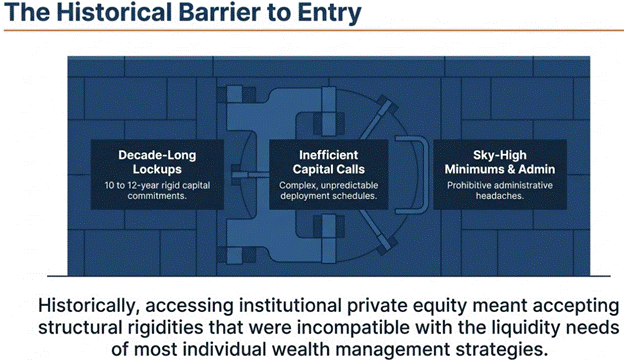
Historically, accessing private markets meant dealing with sky-high minimums, administrative headaches, and decade-long lockups. Evergreen structures, however, allow your capital to be invested immediately and compound continuously, all while offering periodic windows for liquidity. By thoughtfully blending these non-correlated investments into your broader wealth strategy, we aim to help you smooth out market volatility, manage risk, and expand your overall return opportunities.
These bespoke solutions offer exciting avenues for diversification and downside management. However, it is important to remember that alternative investments are complex, and all investments involve risk, including the possible loss of principal; returns are never guaranteed.
Ready to learn more? Complete our qualified / accredited certification.
Infographic Summary

Spencer Wright is the Executive Vice President of Halbert Wealth Management, Inc. and the author of Forecasts & Trends. He has been with HWM for over 25 years.