
This week’s highlights:
- Why “boring” businesses are becoming the most sought-after acquisitions on the market.
- How to prepare your company’s financials for a premium exit.
- The keys to building an unshakeable competitive advantage.
Why “Boring” is the New Premium Asset
For years, flashy tech startups and viral disruptors grabbed all the headlines, but today, private equity firms and family offices are turning their attention to something far more reliable: “boring” businesses. Companies in industries like HVAC, plumbing, commercial cleaning, and accounting are highly sought after because they offer something incredibly rare in modern markets: durability and predictable cash flow.

These businesses provide essential services that people need regardless of economic conditions, making them remarkably resilient during market downturns. Rather than relying on constant innovation or chasing consumer trends, these quiet profit engines focus on consistent execution. By delivering reliable results day in and day out, these unglamorous operations are proving that stability is the ultimate luxury asset.
This durability stems from the fundamental nature of their work; whether it is HVAC repair, plumbing, or accounting, the demand remains constant because these services are non-discretionary. Unlike high-growth tech ventures that may falter when capital becomes expensive or consumer preferences shift, boring businesses often maintain deep economic moats through high switching costs and established local dominance.
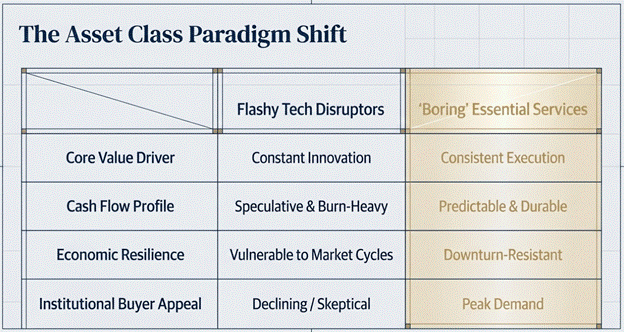
Furthermore, when these companies transition toward recurring revenue models, such as annual maintenance agreements, they significantly reduce perceived risk, making them even more attractive to institutional investors looking for non-correlated assets that smooth out market volatility.
The Secret to a Premium Valuation
If you are thinking about selling your business in the next few years, understanding how buyers value your company is crucial. Smaller businesses, typically those under $3 million in revenue, are usually valued using a multiple of Seller’s Discretionary Earnings (SDE), which includes the owner’s salary and benefits. Larger, more complex firms are evaluated based on EBITDA (Earnings Before Interest, Taxes, Depreciation, and Amortization), which treats the owner’s compensation as a standard market expense.
But here is the real secret: clean, well-organized financials can dramatically increase your valuation multiple. In fact, having pristine financial records and automated reporting can boost a firm’s multiple by 1.5 to 2x. Buyers want to see transparent data that stands up to scrutiny; messy books extend due diligence, erode buyer confidence, and can ultimately kill a deal.
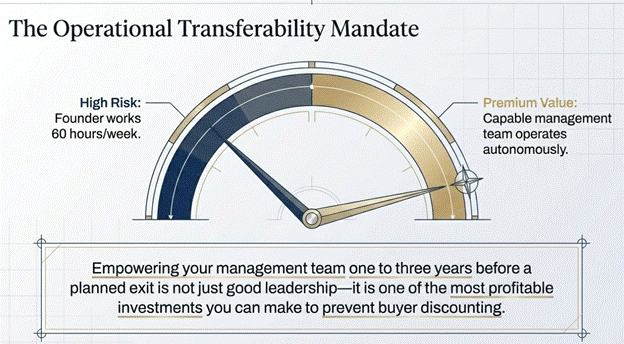
Additionally, buyers look closely at owner dependency. A business that runs smoothly under a capable management team is much more valuable than one where the founder still works 60 hours a week. Taking the time to organize your financials and empower your team one to three years before a planned exit is one of the most profitable investments you can make.
Digging a Deep Economic Moat
To command top dollar on the market, your business needs an economic “moat.” Popularized by Warren Buffett, an economic moat is a durable competitive advantage that protects your market share and profits from rivals.
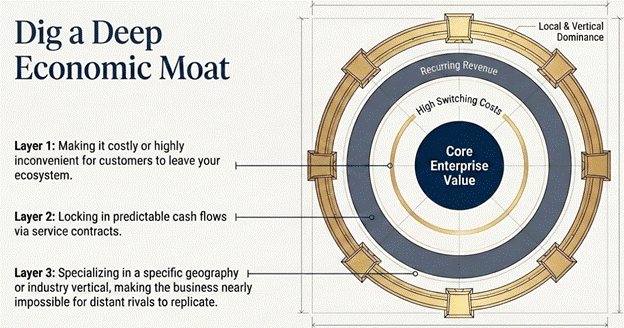
You can dig this moat by establishing high switching costs, which simply means making it costly or inconvenient for customers to leave your ecosystem for a competitor. Another powerful strategy is transitioning your revenue from one-off projects to recurring service contracts, like annual maintenance agreements. Recurring revenue not only increases your cash flow stability but also significantly reduces the perceived risk for potential buyers, often pushing your valuation multiple even higher.
Finally, dominating a specialized local market or focusing your expertise on a specific industry vertical can make your business nearly impossible for distant competitors to replicate.
What You’re Missing
Selling a business you’ve spent years or decades building is a monumental achievement, but a massive liquidity event often brings an unwelcome guest: a heavy tax burden. At Halbert Wealth Management, we believe keeping your hard-earned wealth is just as important as generating it.

This is where bespoke solutions and alternative investments can play a pivotal role. Once your business is sold, you might face complex tax liabilities. However, through careful planning and specialized alternative strategies, you can manage the tax impact of a major windfall.
Our absolute return, risk-aware philosophy means we look beyond traditional stocks and bonds. We help you discover non-correlated investments that aim to smooth out market volatility, protect your newfound wealth, and expand your return opportunities outside the conventional public markets.
Ready to protect your exit? Read our information on a bespoke strategy that can help you after the sale. While you’re there, be sure to register for an upcoming webinar.
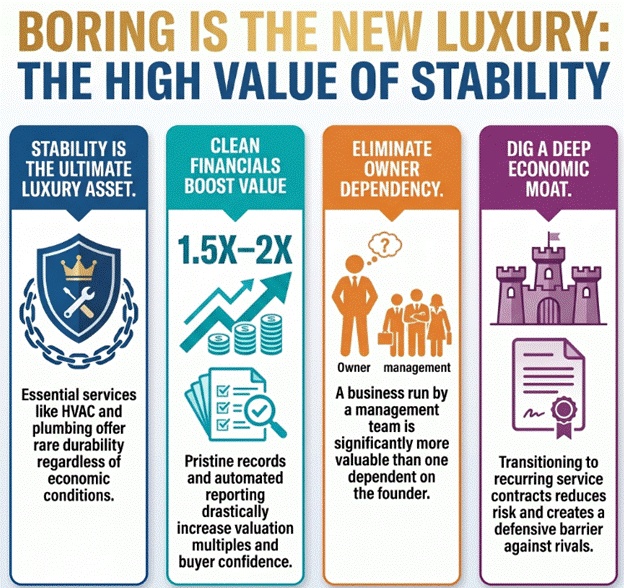
Infographic Summary

Spencer Wright is the Executive Vice President of Halbert Wealth Management, Inc. and the author of Forecasts & Trends. He has been with HWM for over 25 years.