
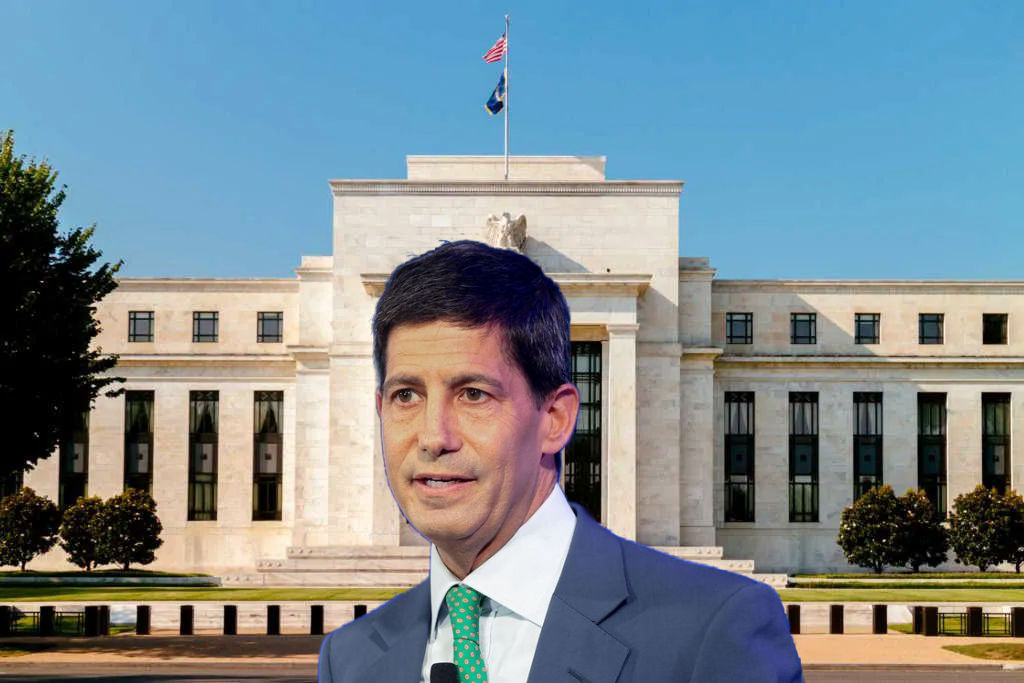
President Trump has officially nominated Kevin Warsh to replace Jerome Powell as Chairman of the Federal Reserve. The markets didn’t wait for confirmation to react; gold crashed, banks rallied, and traders are scrambling to understand the new playbook. This isn’t just a personnel swap, it is a fundamental “regime change” in the philosophy of money.
The Nominee: A Banker, Not a Professor
For decades, the Fed has been run by the “Ph.D. Standard”, academics who view the economy as a machine described by complex equations. Kevin Warsh is a stark departure from this tradition.
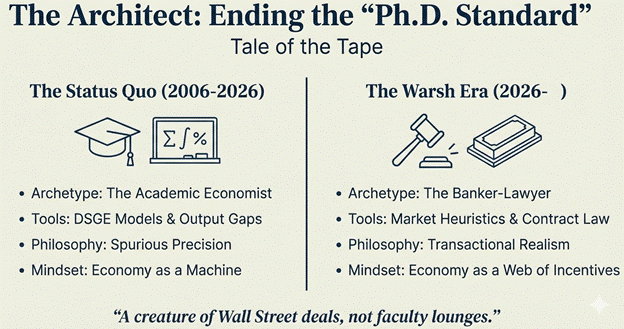
Warsh is a lawyer and a former investment banker. He spent his formative years at Morgan Stanley in the M&A trenches, viewing the economy through the lens of deals, contracts, and market psychology rather than theoretical models. He previously served as the youngest Governor in Fed history (2006–2011), where he acted as the “emissary to Wall Street” during the 2008 financial crisis, personally negotiating with CEOs while the system teetered on the brink.
Why it matters: Warsh’s lack of a Ph.D. is a feature, not a bug, to his supporters. He believes economic modeling offers spurious precision. Expect a Fed that relies less on academic staff forecasts and more on real-time market signals.
The Strategy: The “Barbell” Approach
The most confusing part of this nomination for many observers is Warsh’s reputation. Is he a hawk (high rates) or a dove (low rates)? The answer is: He is both, but in different places. Warsh is proposing a radical “Barbell Strategy” that decouples interest rates from the Fed’s balance sheet.
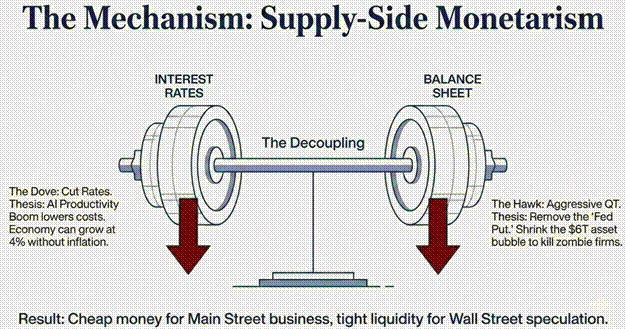
1. The Dove on Rates (The AI Thesis) Warsh plans to cut interest rates, but not for the usual reasons. He subscribes to a supply-side theory that the U.S. is undergoing a massive productivity boom driven by Artificial Intelligence. He argues that because AI drives down costs and increases efficiency, the economy can grow at 3% or 4% without sparking inflation. Therefore, he believes the Fed can cut rates to encourage capital investment without overheating prices.
2. The Hawk on the Balance Sheet (The Cleanup) Here is the twist: While cutting rates, Warsh wants to aggressively shrink the Fed’s $6+ trillion balance sheet. He views the Fed’s massive bond holdings as a relic that distorts markets and encourages reckless government spending.
In Plain English: He wants to make borrowing cheaper for businesses (lower rates) while forcing Wall Street to stand on its own two feet without the Fed acting as a constant backstop (Quantitative Tightening).
The “Warsh Effect”: Winners and Losers
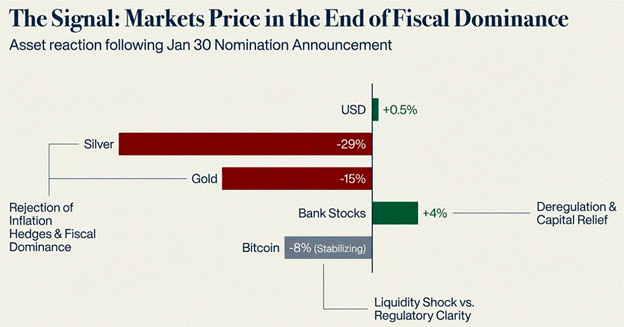
The market’s reaction to the announcement was immediate and violent, traders are already calling the “Warsh Effect”.
- Gold & Silver (The Losers): Gold prices collapsed 15% and silver flash-crashed 29%. Why? Gold bugs have long bet that the Fed would eventually monetize U.S. debt (print money to pay bills). Warsh’s nomination signals a rejection of that path; investors believe he is willing to endure pain to preserve the dollar’s value.
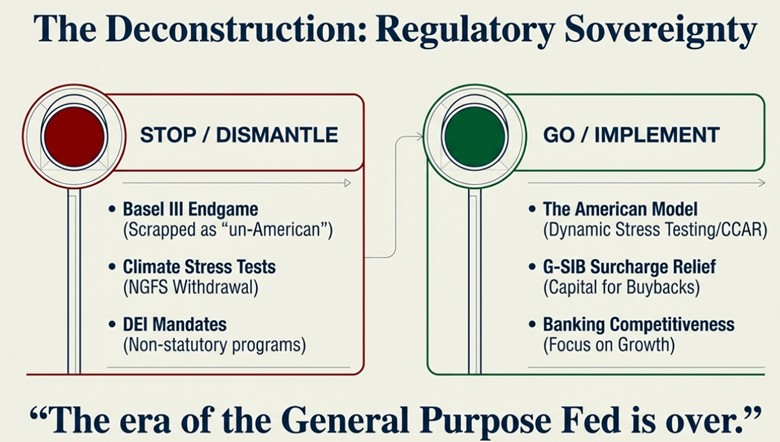
- Bank Stocks (The Winners): Major banks saw their stocks rally. Warsh is an avowed enemy of the “Basel III Endgame”, a set of regulations requiring banks to hold more capital. He has stated, “The Basel endgame isn’t America’s endgame”. Expect a massive wave of deregulation that frees up capital for lending and buybacks.
- Crypto (It’s Complicated): Bitcoin dropped 8% initially. While Warsh sees Bitcoin as a significant asset and a useful check on central banks, he is wary of private crypto fraud. However, the long-term play here is his support for a “Wholesale Digital Dollar”, a Fed-backed digital currency for banks to modernize payment plumbing and counter China’s rising digital currency.
The Institutional Overhaul: Silence is Golden
If you have grown used to the Fed telegraphing its every move, get ready for a shock. Warsh believes the modern Fed talks too much and that excessive transparency creates “groupthink”.
He plans to kill the infamous Dot Plot, the chart showing where Fed officials think rates will go in the future. He argues this creates a false sense of certainty. Under Warsh, the Fed will return to constructive ambiguity. This means the Fed will act based on data meeting-by-meeting, without promising the market what it will do six months from now.
The Risk: Without the “roadmap” of the Dot Plot, market volatility will likely increase. Warsh believes this is healthy, he wants investors to manage their own risk rather than relying on the “Fed Put” to save them.
The Hurdles Ahead
While the nomination is official, Warsh isn’t sitting in the big chair yet. The path to confirmation faces a unique political obstacle.
Republican Senator Thom Tillis has threatened to block any nominee until a Department of Justice investigation into current Chair Jerome Powell is resolved. The investigation, ostensibly about procurement and office renovations, is viewed by many as a political weapon used by the White House against Powell. Warsh will have to navigate this toxic political landscape to get confirmed.
Furthermore, Warsh is entering the role with a mission to dismantle the “General Purpose Fed.” He intends to strip away mandates related to climate change and social engineering, returning the institution to a narrow focus on price stability and growth.
The Bottom Line
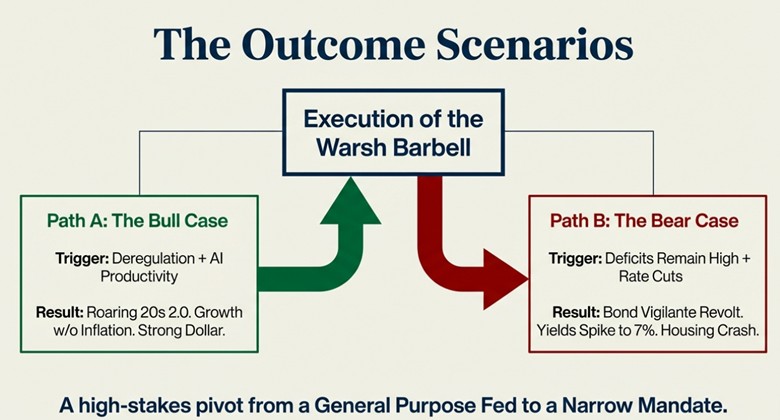
Kevin Warsh’s nomination is a high-stakes gamble on American dynamism.
The Bull Case: His deregulation and rate cuts fuel a “Roaring 20s” AI boom, while his discipline on the balance sheet restores the dollar’s credibility. The Bear Case: The bond market revolts against the “Barbell” strategy. If he cuts rates while the deficit is high, long-term interest rates could spike (the “Bond Vigilantes”), crushing the housing market.
We are moving from an era of academic modeling to an era of market deal-making. For business leaders, this means preparing for a potentially faster-growing economy, but one with less hand-holding from the central bank.
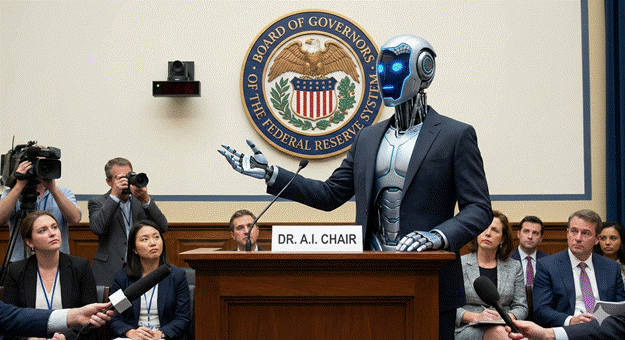
The New AI Fed Chair
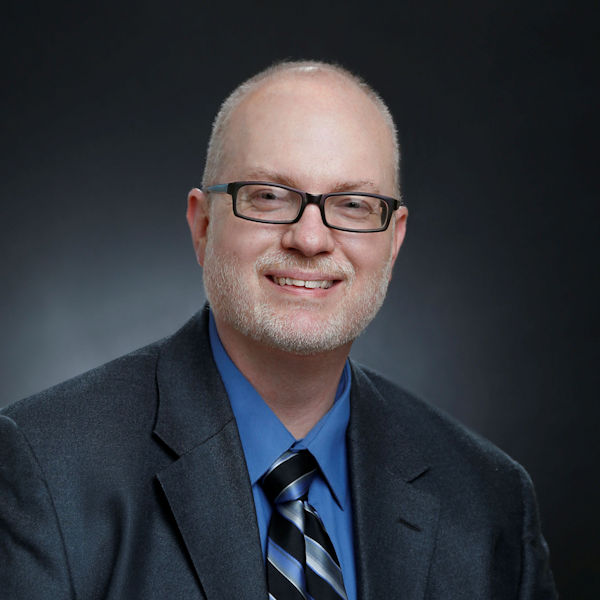
Spencer Wright is the Executive Vice President of Halbert Wealth Management, Inc. and the author of Forecasts & Trends. He has been with HWM for over 25 years.